
Evaluating the 2025 penny value requires a comprehensive analysis considering inflationary pressure on the American economy and the rising production costs of the US Mint.
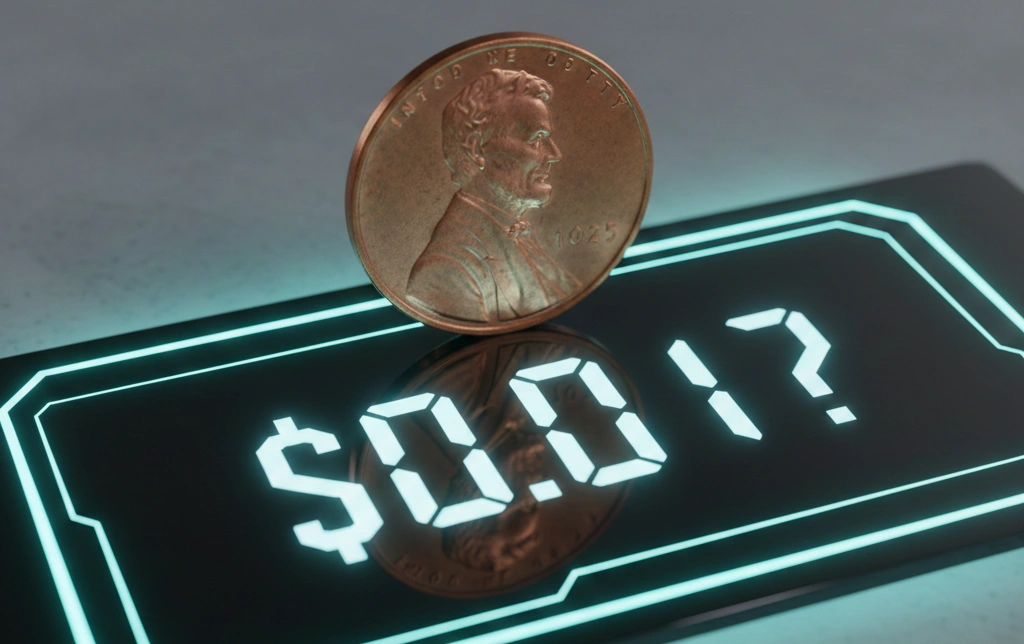
In 2025, the purchasing power of a single cent reached a historical minimum, rendering the coin practically useless for retail transactions.
Nevertheless, the numismatic value of individual specimens continues to demonstrate independent dynamics determined by grade rarity and technical defects.
In 2025, the cost of producing a single cent continues to significantly exceed its nominal value.
Using zinc and copper as primary components makes production unprofitable for the state, creating a situation of "negative seigniorage."
Production Cost (2024-2025): Estimated at 3.07 – 3.20 cents per coin.
Composition: 97.5% zinc, 2.5% copper plating.
Metal Price Dynamics: A 4.5% increase in copper prices on global markets during the last reporting period directly affects budget expenditures.
Such an economic situation stimulates discussions regarding the withdrawal of the penny from circulation, potentially increasing the collectible value of 2025 issues in the future.
Purchasing Power of the Penny in 2025
Inflation accumulated over recent decades led to the devaluation of the small coin to a level excluding its effective use.
For comparison, a 2025 cent possesses a purchasing power equivalent to approximately 0.11 cents in 1970 prices.
Issue Year | Denomination | Real Value (in 2025 Dollars) | Decline Percentage |
1975 | $0.01 | $0.058 | 0% |
1995 | $0.01 | $0.021 | 63% |
2015 | $0.01 | $0.013 | 77% |
2025 | $0.01 | $0.010 | 83% |
This statistics confirms that investing in standard coins from circulation at face value is unprofitable from a real asset value perspective.
Numismatic Markup Under Inflation
Despite the devaluation of the face value, the numismatic market demonstrates resilience to inflationary processes.
Investors often use rare coins as a protective asset with prices rising proportionally to or faster than inflation rates (CPI).
MS67 RD Grade: Demonstrates an average growth of 6% per year, outpacing inflation by 2.5–3%.
MS68 RD Grade: Functions as a highly liquid asset showing a 12% annual value increase given stable demand.
MS69 RD Grade: Due to extreme rarity, the price can double every 5-7 years regardless of economic indicators.
Percentage Value Change of Rare Modern Cents
Analyzing historical data from recent years allows for forecasting price dynamics for top 2025 grades.
During periods of high inflation (above 5%), the value of certified coins in Gem Brilliant Uncirculated condition increases at an outperforming rate.
2021-2022 (Inflation Peak): Price growth for modern cents in MS68 grade reached 18% per year.
2023-2024 (Stabilization): Growth slowed to 4%, matching general market trends.
2025-2026 Forecast: Growth of 7-9% is expected in case of renewed volatility in commodity markets.
Defects as Inflation Protection
Mint errors represent unique objects with prices practically unattached to face value or metal weight.
Finding a rare defect with the free coin identifier app on a 2025 coin ensures an instant return on investment exceeding the face value thousands of times.
Error Type | Estimated Price (USD) | Face Value Multiplier |
Major Off-center (40%+) | $75 - $150 | 7,500x - 15,000x |
Doubled Die Obverse (DDO) | $25 - $200 | 2,500x - 20,000x |
Die Cap | $250 - $500 | 25,000x - 50,000x |
Blank (No Strike) | $2 - $5 | 200x - 500x |
These figures confirm the feasibility of searching for errors even amidst currency devaluation.
Zinc Cost Influence on "Survival Price"
Upon reaching a certain inflation threshold, the metal value in a penny may exceed its face value enough to make mass melting economically viable.
In 2025, a federal ban on exporting and melting cents remains active in the US, preventing the destruction of the coin mass.
Nevertheless, maintaining current inflation rates might lead to the zinc value in a single coin reaching 1.5 – 2.0 cents by 2030.
This creates a theoretical "price floor" for the coin, preventing its real market value from falling below the weight of the metal contained within.
Investment Strategies in 2025
Professional market participants utilize several methods to minimize inflationary risks when dealing with the 2025 issue.
Bulk Grading: Sorting through thousands of coins to submit only those contending for MS68 and higher for grading.
Storing Sealed Rolls: Preserving original bank rolls whose value could grow by 300% in 10 years due to the possibility of finding perfect specimens inside.
Mint Diversification: Collecting sets from Philadelphia, Denver, and San Francisco (Proof) to ensure collection completeness.
Comparison with Record Prices of Past Periods
Studying records helps understand the value ceiling that 2025 penny owners can expect in the future.
Record for Modern Cents: A 2010-S (Proof) in PR70DCAM grade was sold for over 1,000 dollars.
Record for Zinc Cents: A 1992 Close AM sold for 25,850 dollars.
Inflation increases these amounts in nominal terms, yet real capital growth is ensured only by the exceptional rarity of the object.

Certification Demand Statistics (2025)
The number of grading applications like the coin checker app for new 2025 coins in the first three months showed a 12% increase compared to the same period in 2024.
This indicates high activity among collectors attempting to fix the condition of coins before the start of their natural oxidation.
Average MS68 Yield: 1 in 5,000 inspected coins.
Average MS69 Yield: 1 in 150,000 inspected coins.
Logistics Costs: Increased by 15% due to rising postal service rates in 2025.
Liquidity Risk During Economic Downturn
In the event of a possible recession in 2025, the liquidity of standard coins falls faster than the value of rare specimens.
MS63-MS65 grade coins become practically illiquid, as their shipping costs exceed their market price.
Investors are advised to concentrate on assets valued above 100 USD to ensure the possibility of rapid realization without losses.
Final Decade Forecast
By 2035, the 2025 penny will likely be perceived as a historical artifact of the final stage of small change existence.
Inflation will continue to reduce the number of specimens available in perfect condition through wear and accidental disposal.
MS67 Price Forecast (2035): 45.00 - 60.00 USD.
MS68 Price Forecast (2035): 180.00 - 250.00 USD.
Circulation Status: High probability of official termination of use in transactions.
Analyzing the 2025 penny value in a world of inflation confirms the dual nature of this asset.
On one hand, the nominal value of the coin tends toward zero, losing purchasing power under the influence of macroeconomic factors.
On the other hand, numismatic characteristics provide stable capital growth for owners of certified rare specimens.
A systematic approach to studying defects and strict adherence to storage rules remain the only ways to preserve and multiply the value of the 2025 cent in the long term.